
Last updated November 4, 2026
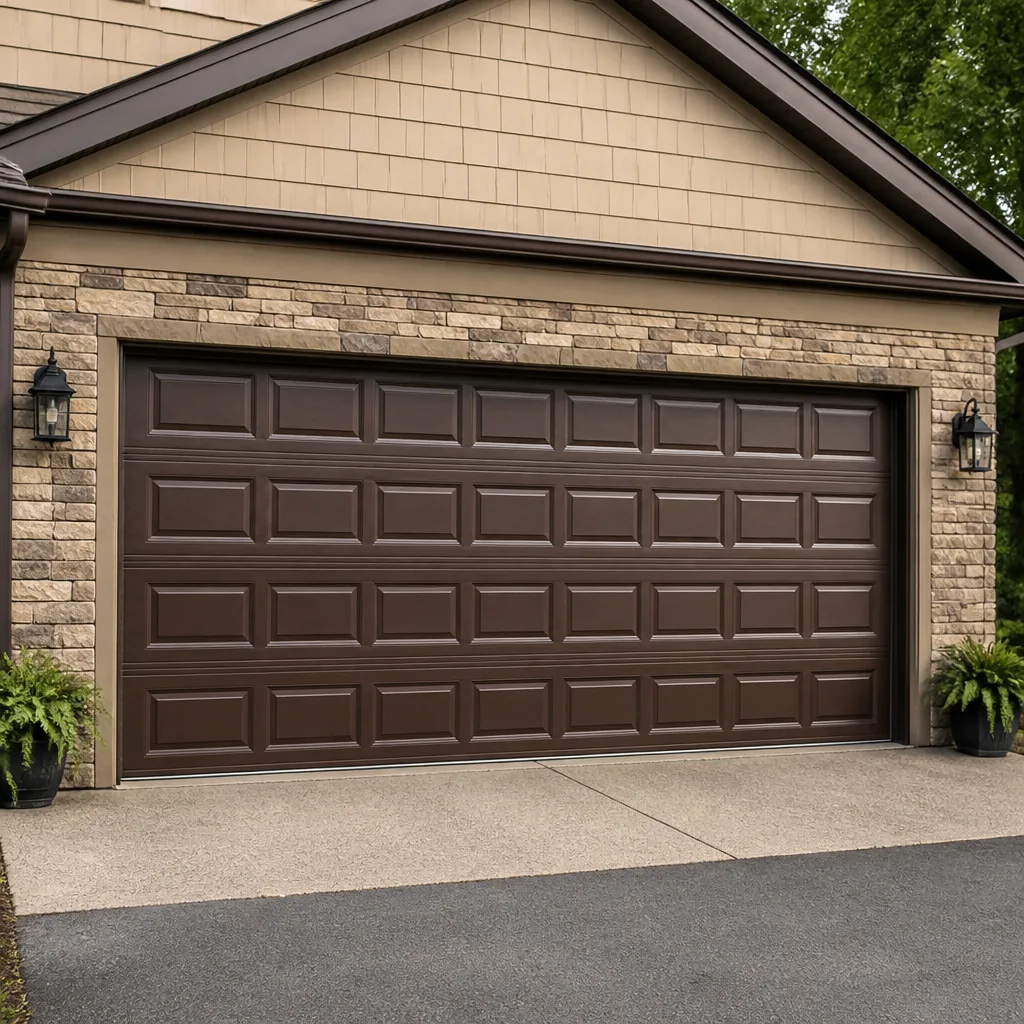 Raised-panel steel
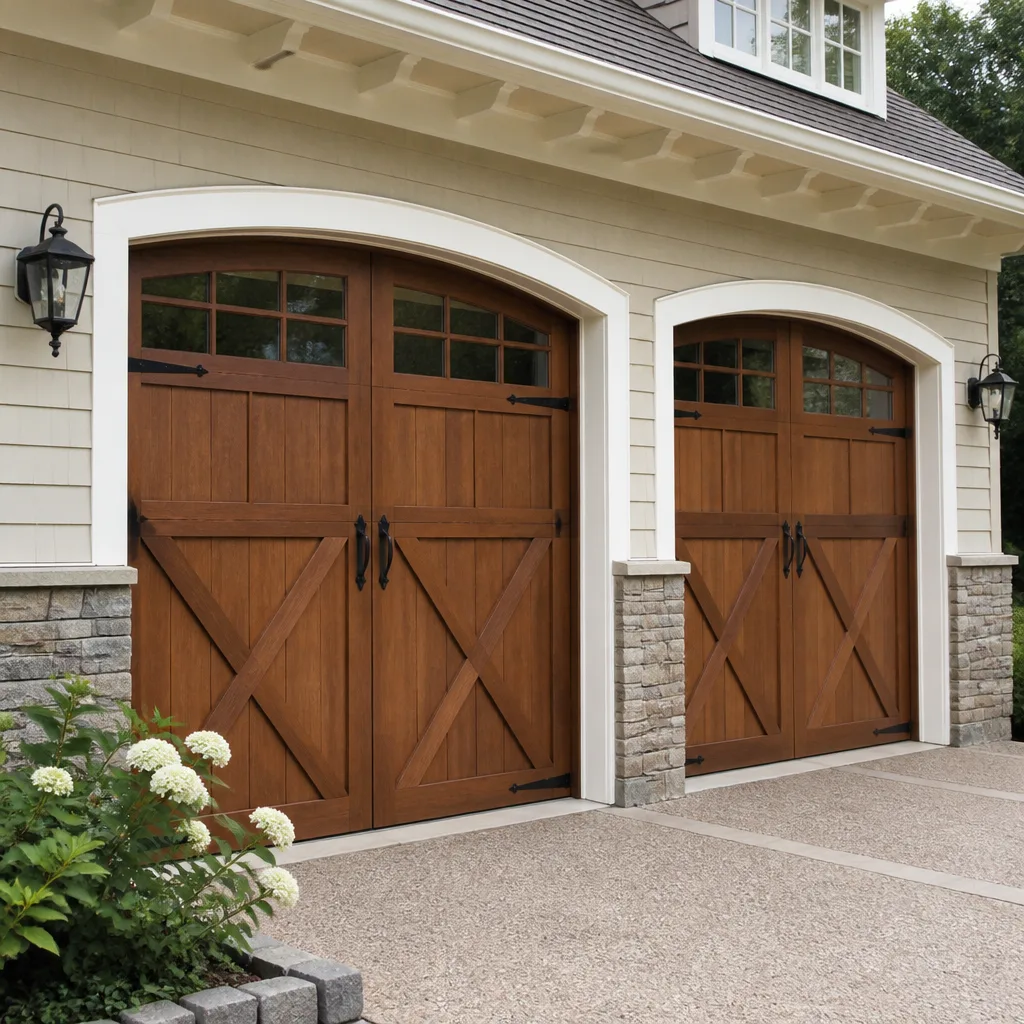 Carriage house
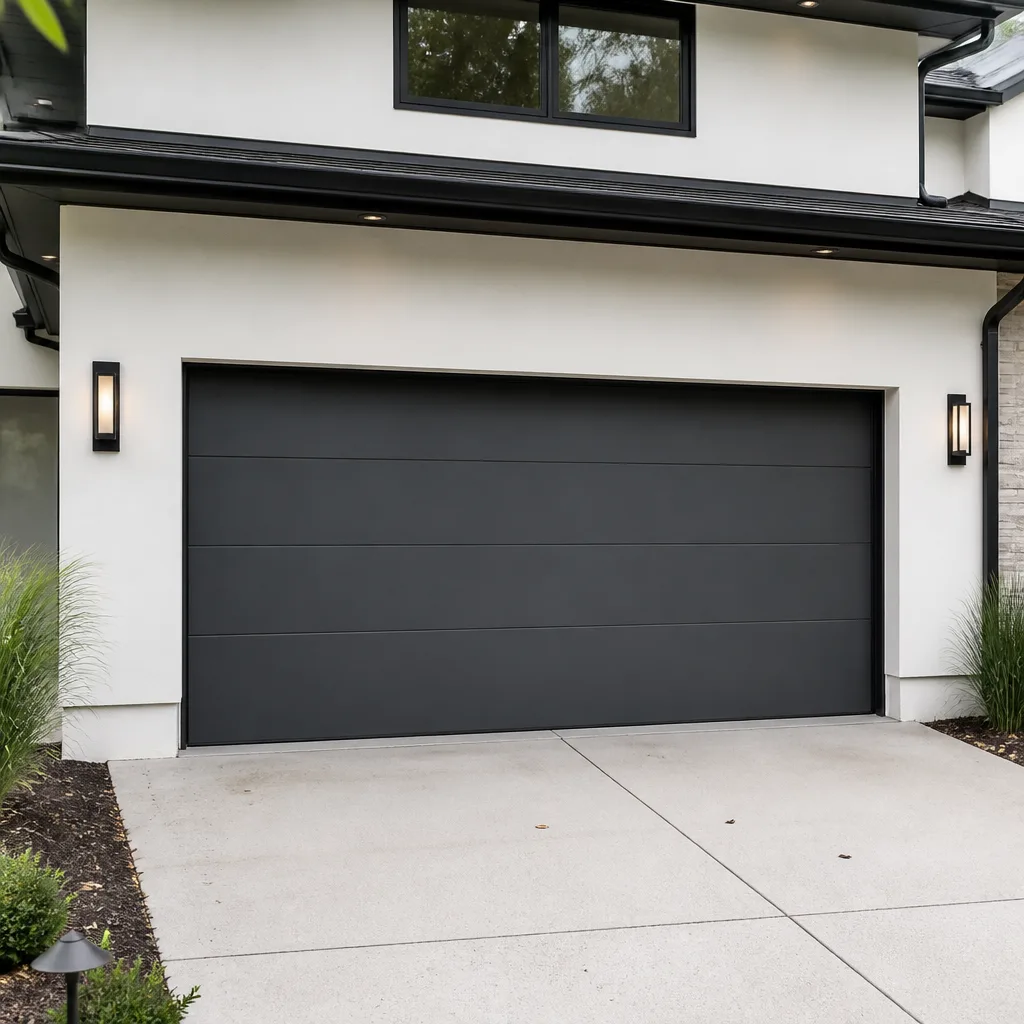 Modern flush
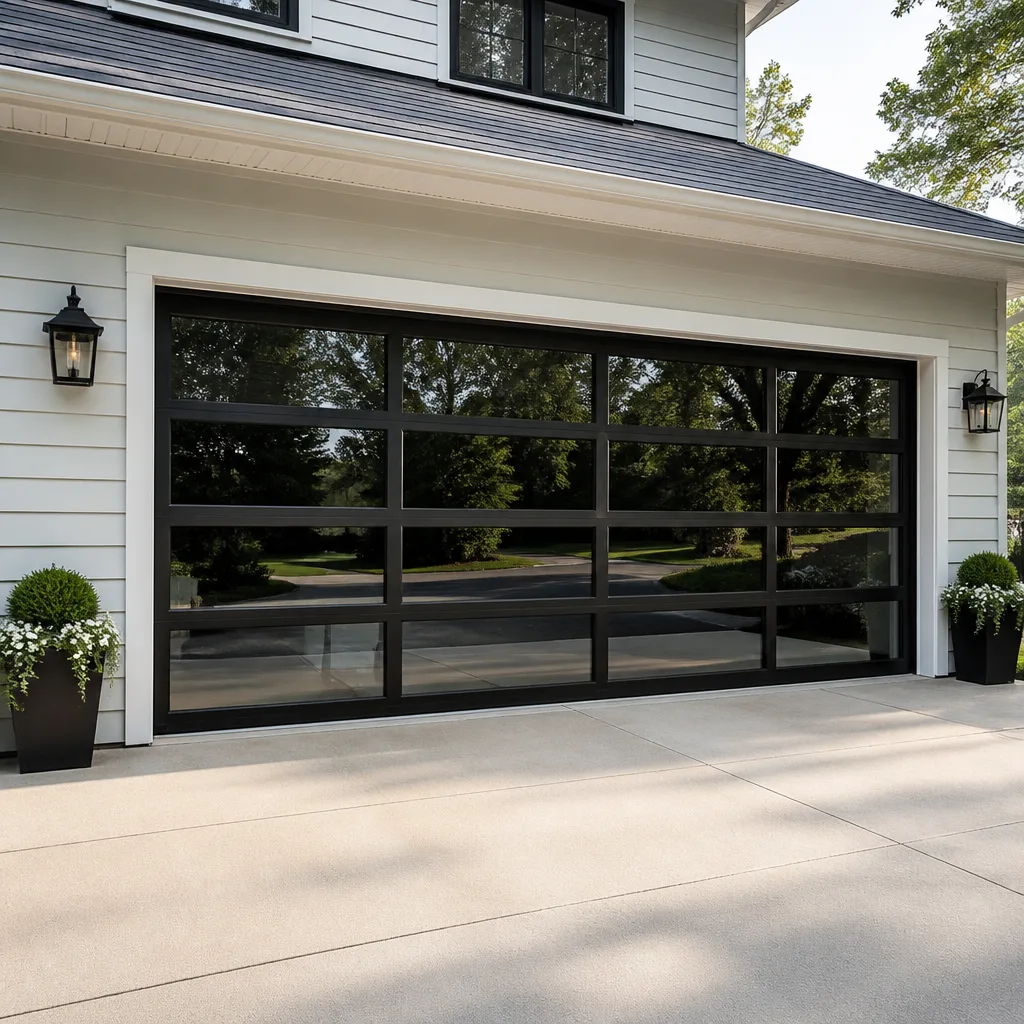 Full-view glass
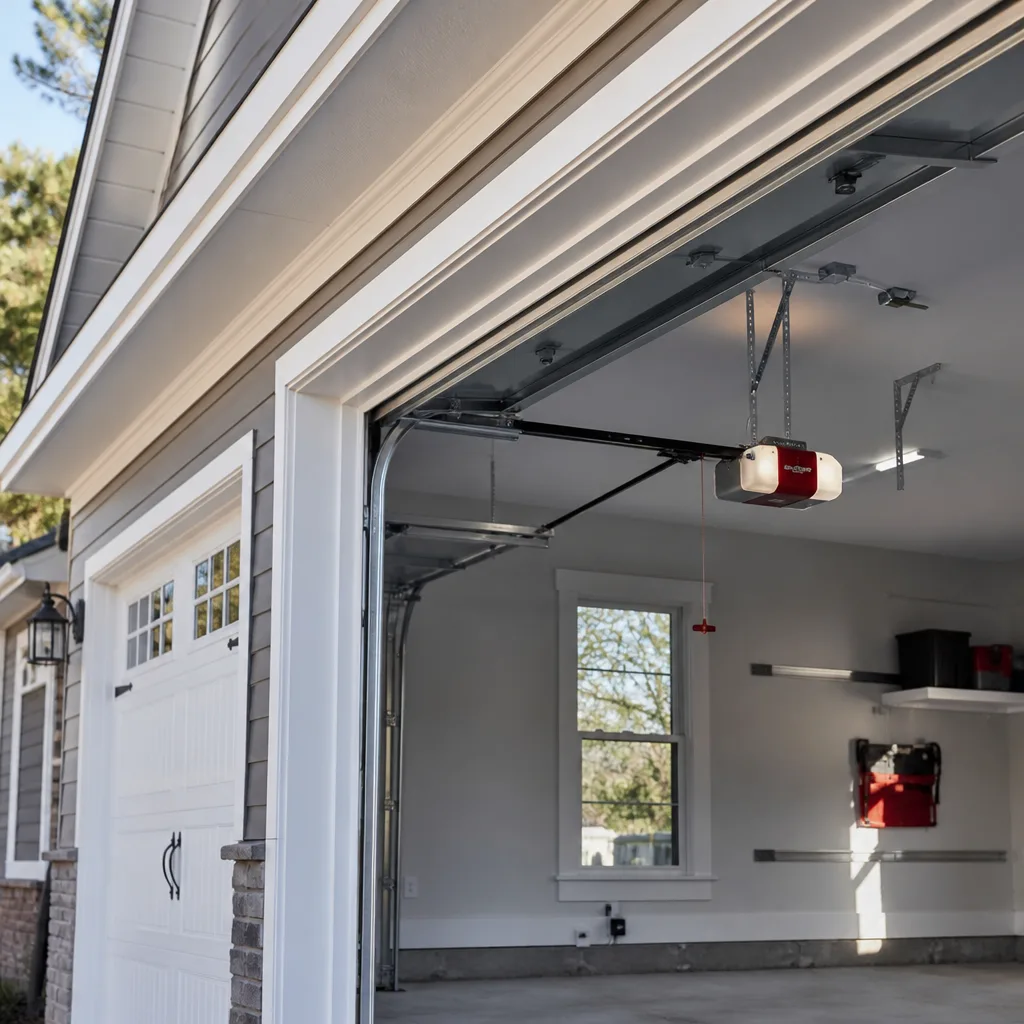 LiftMaster openers
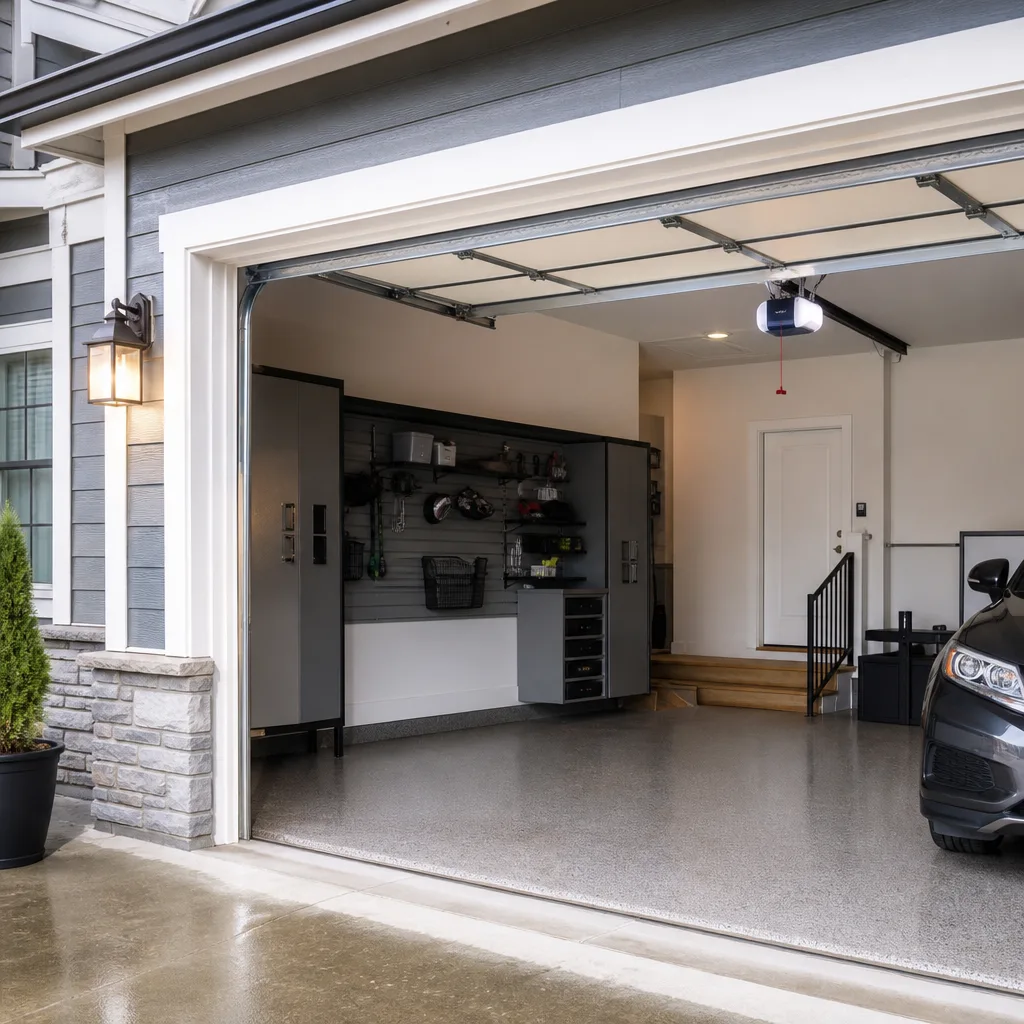 Chamberlain openers
Full 25-point door and opener safety check with every visit - springs, cables, rollers, tracks, and your LiftMaster or Chamberlain opener included
You get a price before we start. It does not change when the truck arrives.
Get your free estimateGarage Door Permits, Codes & Inspections in San Clemente, CA: What You Need to Know
Swapping a garage door sounds like a simple swap, until your home inspector flags it as an unpermitted alteration and your buyer’s lender puts the sale on hold. That scenario plays out in San Clemente more often than homeowners expect, and it usually traces back to one assumption: that a garage door is just a big moving wall, so no permit could possibly be required. The reality is more layered. California’s Title 24 energy code, the City of San Clemente’s building rules, and your HOA’s architectural guidelines can each have a say in what should be a straightforward replacement. This guide walks you through the exact situations where a permit is required, what the city process looks like, and how to avoid the mistakes we’ve seen derail closings and inspections.
Quick Answer
Most like-for-like garage door replacements in San Clemente do not require a city permit when the opening, framing, and electrical are unchanged. However, any alteration to the opening size, structural framing, or the door’s energy performance on an attached or conditioned garage can trigger a California Title 24 compliance review and require a permit from the San Clemente Community Development Department. When in doubt, call the city’s building division before work starts.
Styles & brands we work with
- Raised-panel steel
- Carriage house
- Modern flush
- Full-view glass
- LiftMaster openers
- Chamberlain openers
Table of Contents
- What Counts as a Like-for-Like Replacement in San Clemente
- California Title 24 and Garage Door Insulation Requirements
- The San Clemente Permit Process Step by Step
- HOA Approval vs. City Permits: Why You Need Both
- What If the Previous Owner Skipped the Permit
- What Inspectors Actually Check on a Garage Door
- Common Mistakes to Avoid
- When to Call a Professional
What Counts as a Like-for-Like Replacement in San Clemente
The single most important distinction in San Clemente’s permit rules is whether your new garage door qualifies as a like-for-like swap. If the existing opening stays exactly the same size and shape, the framing remains untouched, and the door hardware operates from the same electrical setup, the city typically treats the project as a repair or maintenance task rather than an alteration. In that case, no building permit is required. You pull out the old door, install the new one in the same footprint, and move on with your day.
The permit conversation changes the moment the project stops being a swap. Any of these conditions pushes your garage door replacement into permit territory in San Clemente:
- Enlarging or widening the door opening: If you’re converting a single-car opening to a wider double-door footprint, that means structural work on the wall and header. The city needs to review the framing, load path, and foundation connection points.
- Cutting a new opening where one did not exist: This is a structural alteration, not a door replacement. You’ll need engineered drawings and a full plan review.
- Framing in or reducing an existing opening: Even shrinking the opening requires a permit because you’re altering the load-bearing wall.
- Adding or changing electrical to support a new opener or smart features: If your new LiftMaster or Genie opener needs a new circuit or relocated outlet, that electrical work triggers its own permit requirements.
- Changing the door’s placement from the garage interior face to the exterior face: Moving the door’s position within the wall assembly changes how weather stripping, flashing, and drainage perform, which the city wants to review.
The practical line is this: if the job looks like the same door going back into the same hole, San Clemente does not generally require a permit. If your new door touches anything structural or electrical beyond the door itself, start with a call to the city’s building division. A garage door repair that swaps springs, panels, rollers, or cables never requires a permit in San Clemente because those parts live inside the existing door assembly.
California Title 24 and Garage Door Insulation Requirements
Here’s the part most San Clemente homeowners never hear about until it bites them: California’s Title 24 energy code includes garage doors that serve conditioned or partially conditioned spaces. If your attached garage shares a wall with the house’s living area, or if the garage itself has any heating or cooling supply, the replacement door must meet specified thermal performance levels. This is not a mild preference. It’s state energy code, and a plan checker can require documentation showing your new door complies.
The energy concern is not about keeping your car comfortable on a mild Southern California morning. It’s about the boundary between your garage and your home. When a garage wall adjoins a living room, family room, or bedroom, heat moves through that shared surface. A thin, uninsulated garage door lets hot inland air or cooler evening air wash against that wall, and your HVAC system works harder than it should. Title 24 treats the garage door as part of the home’s thermal envelope in specific configurations, not as a piece of garage equipment.
In practice, the relevant question is where your garage sits in relation to your conditioned space:
- Detached garage, no HVAC supply: Title 24 insulation requirements generally do not apply in the same way. A standard non-insulated door may be acceptable, though you should confirm with the building department if you’re unsure.
- Attached garage, unheated but sharing a wall with the house: This is the gray zone. Many San Clemente homes fall here. The shared wall is insulated, so the door itself typically faces a lower compliance bar, but the plan checker may still ask for the door’s energy specifications.
- Attached garage with any HVAC supply or exhaust into the garage: Title 24 compliance for the door becomes much more likely. You’ll want documentation from the manufacturer with the door’s U-factor and R-value.
- Garage converted to living space: Once a garage is conditioned living area, a replacement door is no longer a garage door project. You’re replacing an exterior door on a conditioned space, and energy compliance is mandatory.
For homeowners choosing a new door in San Clemente, this means the insulation conversation happens before the style conversation. A door that looks great but cannot produce a compliance spec sheet can stall a permit application. Brands like Clopay, Amarr, and Wayne Dalton all offer insulated steel doors with documented thermal values, and your installer should be able to pull those numbers before you commit. We tell every customer to treat the Title 24 question as a threshold item: if your garage is attached, ask the installer whether the door carries a California-compatible energy rating. It’s a cleaner conversation on the front end than a correction notice on the back end.
The San Clemente Permit Process Step by Step
When a permit is required for your garage door project in San Clemente, the process runs through the Community Development Department, specifically the Building Division. The sequence is straightforward, but it moves at the speed of a city government, not a contractor’s schedule. Here is what the process looks like in practice:
- Determine if you need a permit at all. Describe the project scope to the Building Division. Be specific: existing door size, proposed door size, whether the opening changes, whether electrical work is involved, and whether the garage is attached or detached. This call saves you the trouble of applying for something that isn’t required, or skipping something that is.
- Submit a permit application. For a structural alteration or new opening, you’ll need dimensioned drawings showing the existing and proposed conditions. The city may ask for manufacturer specifications on the new door, particularly if Title 24 compliance is in play.
- Wait for plan check review. A simple alteration might clear plan check in a week or two. Anything involving structural changes, header replacements, or energy documentation can take longer. The reviewer looks at the framing detail, the door’s attachment method, and the energy data if applicable.
- Pay the permit fee. Fees are based on the project valuation and the review hours involved. The Building Division can give you a range before you apply.
- Complete the work. Your installer performs the structural changes, door installation, and any required electrical work according to the approved plans.
- Schedule the inspection. For most garage door permits in San Clemente, the inspection happens once, after the work is complete. The inspector verifies that what was built matches what was approved. If the plan reviewer flagged energy compliance, have the door’s spec sheet on site for the inspector.
One note worth making clear: the permit timeline depends heavily on the scope. A like-for-like swap that somehow triggers a permit will be quick. A structural enlargement with engineering review can take weeks. If you’re on a deadline, like a home sale or an insurance repair, factor that time in before you start. Fast dispatch from 7am to 7pm is how a technician works; plan review runs on city time. That’s not a knock on San Clemente, just the reality of municipal permitting anywhere in California.
HOA Approval vs. City Permits: Why You Need Both
In a significant number of San Clemente neighborhoods, your city permit is only half the conversation. Planned communities and developments throughout the area carry architectural standards that apply to garage doors regardless of what the city says. An HOA in San Clemente can reject a door color, style, material, or window pattern even if the city has already issued a permit for the project. These two approval tracks are separate, and neither one substitutes for the other.
The distinction matters because people collapse the two processes in their minds. “The city approved it” feels like a complete answer. It isn’t, if your HOA’s design guidelines require a specific door style or restrict what’s visible from the street. An HOA’s concern is aesthetic and architectural, sometimes tied to the community’s original design intent. The city’s concern is safety, structure, and energy code. You need both sign-offs, and sometimes you need them before work begins, depending on how your HOA’s review process is written.
Here’s what to check if you live in an HOA-governed community in San Clemente:
- Design review application: Many HOAs require you to submit a request before installing a door with a different material or appearance than the original.
- Color and style restrictions: Some communities limit doors to specific colors, panel profiles, or materials. A door you love may not be a door they allow.
- Window and hardware specifications: If the door has windows, the HOA may dictate the glass pattern, panel layout, or placement.
- Fine and reversal risk: Installing a door without HOA approval can trigger a notice to remove it, even if the city permit was valid. That’s a painful conversation after the fact.
- Timeline differences: HOA review can take longer than the city’s plan check in some communities. Start the HOA request early, in parallel with your city application.
If you’re replacing a door in a community you just moved into, pull the architectural guidelines before you shop. The document is usually part of your buyer’s packet, and it may save you from a door that has to come back out.
What If the Previous Owner Skipped the Permit
Buying a home and discovering that the previous owner replaced the garage door without pulling a permit is more common in San Clemente than the city would like. The discovery usually happens at the worst possible time: during a pre-sale inspection, a refinance appraisal, or after you’ve owned the home for months and something about the door’s installation raises a question. This situation is manageable, but only if you approach it directly.
The first step is to assess what you’re actually dealing with. An unpermitted like-for-like replacement may be a non-issue from the city’s perspective, because no permit was required in the first place. The problem arises when the unpermitted work involved structural changes, a new opening, or electrical modifications. Those are the items the city would have wanted to review, and they’re the items a future buyer’s inspector will flag.
Here’s the sequence we’ve seen work for San Clemente homeowners in this situation:
- Determine the scope of the previous work. Look for clues: does the door opening show signs of reframing? Does the door’s electrical setup look recent? Is there a permit history on file with the city for any garage work?
- Pull the permit history from the Community Development Department. You can request the records for your address. If a permit was issued, you’ll see it. If not, you’ll know.
- If the work is structurally significant, apply for a permit after the fact. San Clemente can review existing conditions and, in many cases, issue a permit retrospectively. The work has to pass inspection, and you may need to expose framing or electrical that’s been covered.
- Hire a garage door specialist to inspect the work. A focused garage door company can tell you whether the installation was done to a professional standard or whether it needs correction before any inspection happens.
- Keep all documentation. Once the permit is closed, retain the records. When you sell, having a clean permit history for the garage door closes the question before a buyer’s inspector opens it.
The cost of fixing an unpermitted door is nearly always lower than the cost of an unresolved flag in a transaction. Lenders don’t like open questions. Buyers don’t like surprises. And nobody wants a door that might have to be removed later because the permitting trail never existed.
What Inspectors Actually Check on a Garage Door
If your San Clemente garage door project does require a permit, the inspection is the moment of truth. Understanding what the inspector is looking for helps you prepare, and it helps you be realistic about whether a cheap installation will pass. Builders and garage door specialists in the area all work under the same California Building Code and city amendments, and the inspector’s checklist follows a clear pattern.
For a garage door replacement or alteration, the inspector is typically checking:
- Framing and header: If the opening changed size, the header must be sized correctly for the new span. The inspector checks the connection from header to framing and the load path to the foundation.
- Anchorage and attachment: The track assembly and mounting points must be securely fastened. Poor anchoring is one of the most common reasons a field inspection fails.
- Door operation and balance: The door must travel smoothly, stay in place when partially open, and not bind. A garage door specialist checks this as part of installation; the inspector verifies it as part of compliance.
- Safety reversing devices: The photoelectric sensors and auto-reverse mechanism must be present and functional. This applies when a new opener is installed as part of the project.
- Electrical work: If the project included a new circuit or relocated outlet, the inspector checks the wiring, grounding, and GFCI protection if required.
- Fire separation between garage and house: For attached garages, the door between the garage and the living space must maintain its fire rating. If the garage door replacement somehow altered that assembly, the inspector will flag it.
- Title 24 documentation: If the plan review flagged the door for energy compliance, the inspector may verify the installed door matches the approved specification.
One thing inspectors in San Clemente do not check is the aesthetic quality of your door choice. They’re not there to judge the color, the window pattern, or whether the design matches your home’s architecture. That’s the HOA’s job, which is why the two processes exist in parallel. The city inspection is about safety, structure, and code compliance. The HOA review is about appearance and community standards.
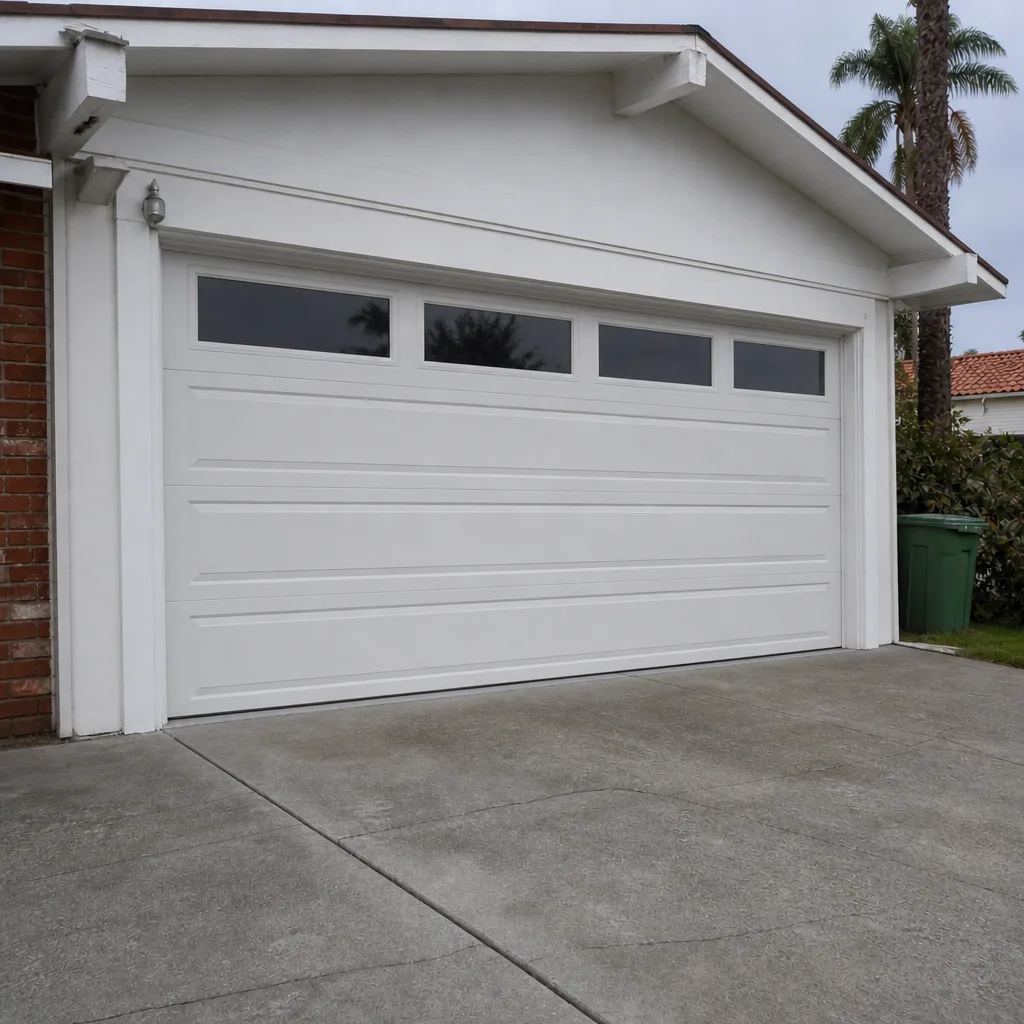
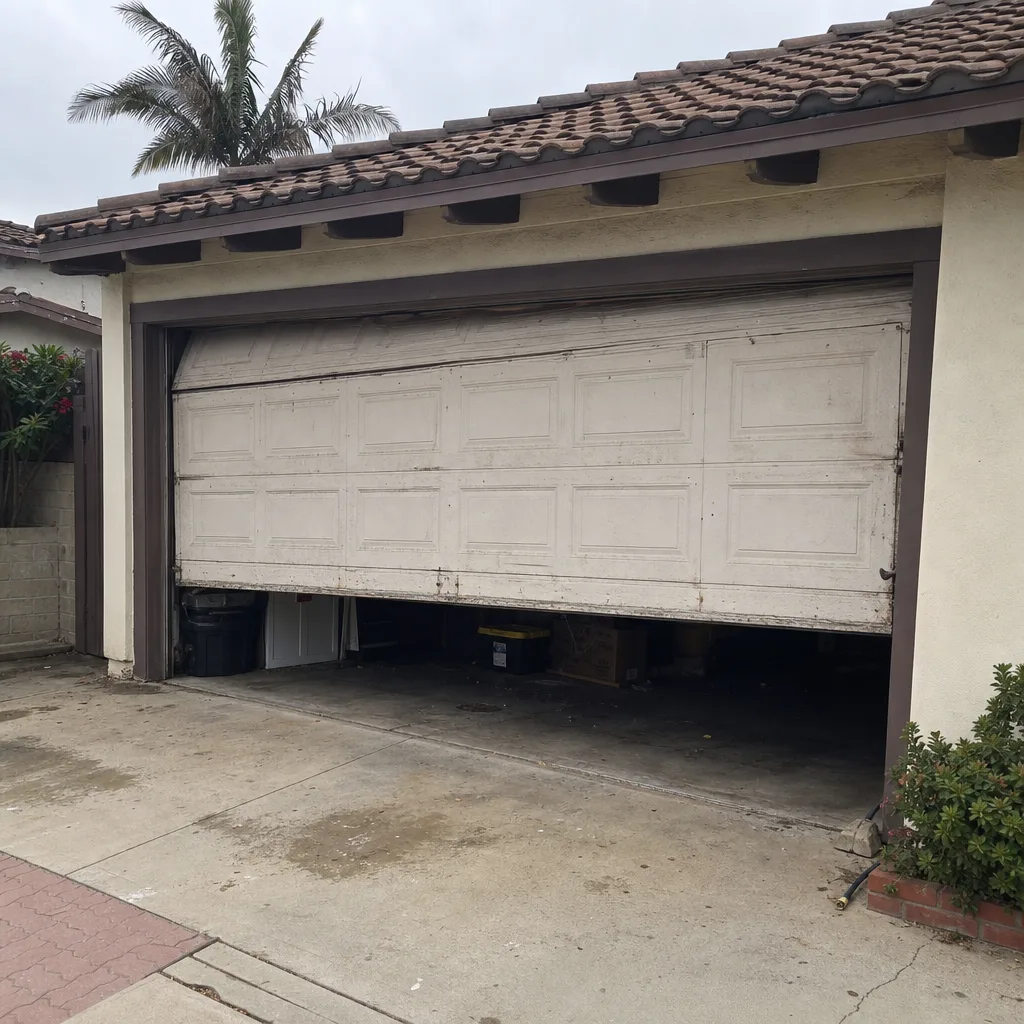
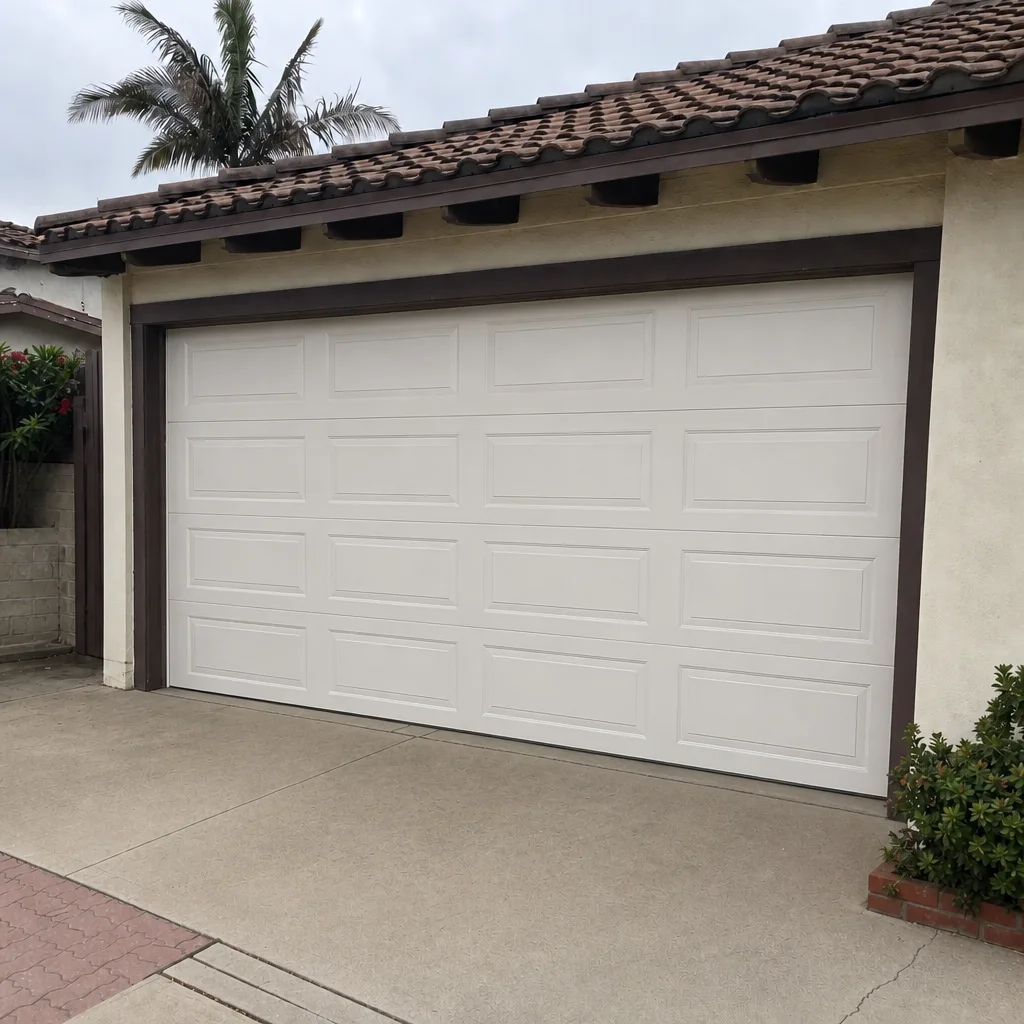
See the difference
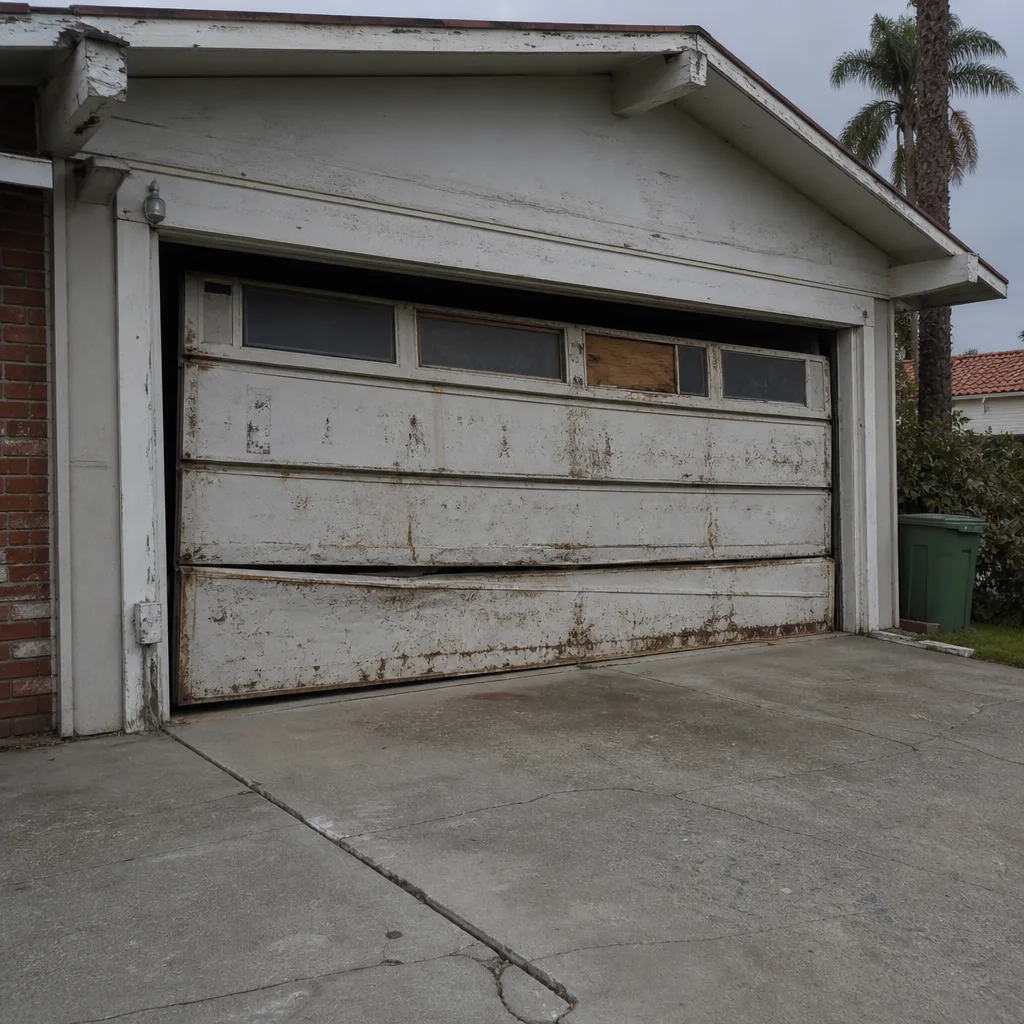 Before
 After
 Before
 After
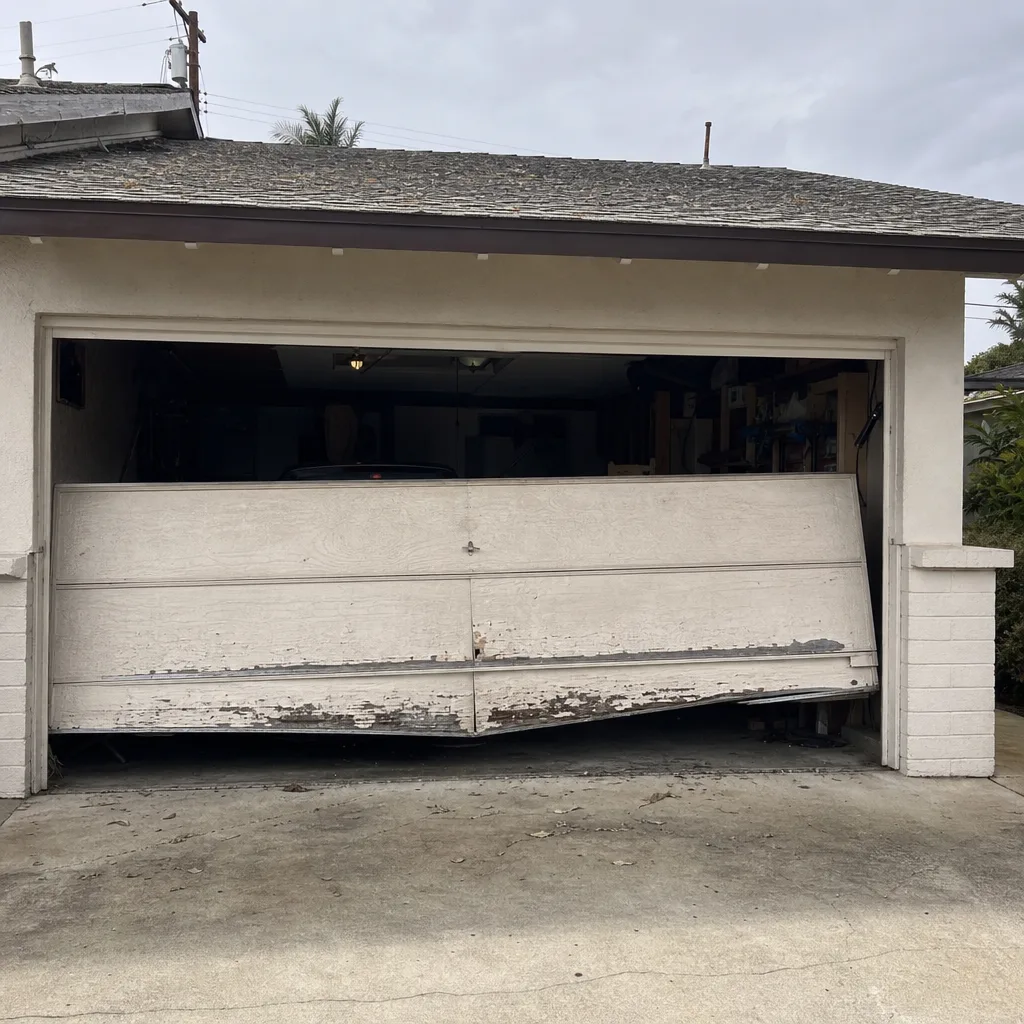 Before
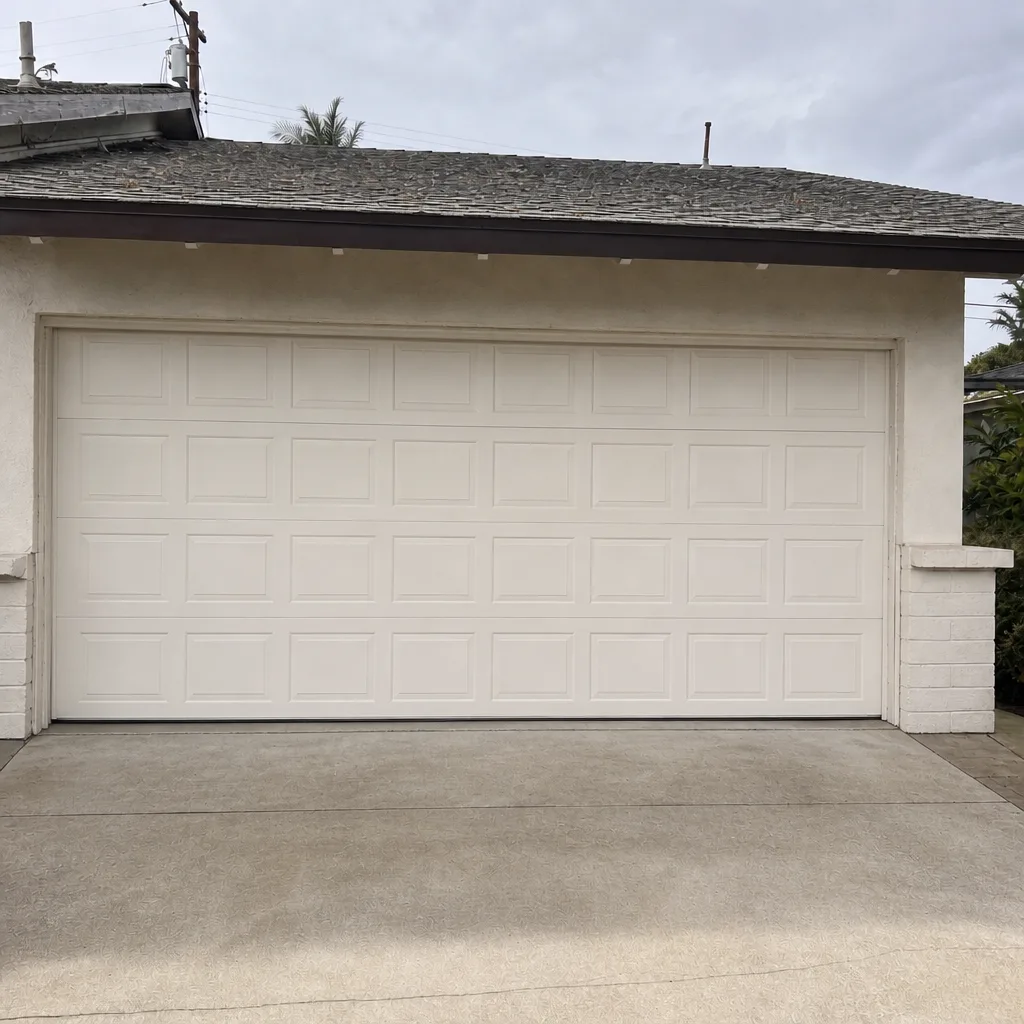 After
Common Mistakes to Avoid
- Assuming no permit is ever needed for a garage door. A like-for-like swap is usually fine, but the moment the opening changes size or the garage is conditioned, the rules shift. Check before you install rather than being corrected after.
- Ignoring Title 24 energy requirements on attached garages. California’s energy code can require documentation for a replacement door. If your garage is attached and shares a wall with living space, ask for the door’s thermal specs before you buy.
- Getting a city permit but skipping HOA approval. These are separate tracks in many San Clemente communities. Both must clear before the work is legitimate.
- Treating an opener swap as permit-free without checking the electrical. Replacing a Chamberlain or LiftMaster opener that plugs into an existing outlet is one thing. Running a new circuit to support it is another. One is maintenance; the other is electrical work.
- Buying a home and ignoring an unpermitted door. The problem does not disappear. Either it was a simple swap and it’s a non-issue, or it was structural and you’ll want a permit after the fact. Either way, figure it out before you sell.
- Hiring a generalist who doesn’t understand garage door code. A handyman who can patch drywall is not necessarily a handyman who knows how a garage door header should be sized. Garage doors are a specific trade with specific code requirements.
- Rushing the permit timeline and being surprised when it’s slow. San Clemente’s Community Development Department reviews plans in the order they arrive. If your closing depends on a clean permit, start early.
When to Call a Professional
Any project that moves beyond a like-for-like replacement is a project where you want a garage door specialist involved. Structural alterations to the opening, header work, and energy compliance reviews are not weekend projects, and they’re certainly not something to trust to a general handyman. A garage door installer who works across multiple brands, including Clopay, Amarr, Raynor, and Wayne Dalton, can speak to how each product handles Title 24 documentation, which saves you time in plan review. The company also needs to know the difference between a door that needs a permit and one that doesn’t, because a good installer tells you the truth before the work starts, not after the inspector shows up.
For garage door opener repair, the permitting question rarely applies, since swapping an opener on an existing outlet is maintenance. But for a full installation or any change to the door’s footprint, the specialist’s role is to keep you code-compliant without making the process more complicated than it needs to be. Aspen Garage Door Service offers free estimates in San Clemente. Call (866) 321-6293 to talk through your project before you touch the wall.
Frequently Asked Questions
You generally do not need a permit for a like-for-like replacement where the opening size, framing, and electrical remain unchanged in San Clemente. A permit is triggered when the project alters the opening’s structure, changes the garage’s energy profile, or involves new electrical work. Call the city’s Building Division to confirm your specific scope before work begins. For an expert read on your project, call (866) 321-6293.
Permit fees in San Clemente are based on project valuation and review hours, so a structural alteration costs more than a simple compliance review. The Community Development Department can give you a fee range once you describe the scope. Estimates for the door and installation itself are always free when you work with a local garage door specialist, and the permit fee is separate from the construction cost.
It depends on whether the garage is conditioned or shares a wall with conditioned space. If your attached garage has HVAC supply or adjoins living areas, the replacement door may need documented thermal performance under California Title 24. Ask your installer for the door’s energy specs and bring that documentation to plan review if the city requests it.
HOA architectural guidelines are separate from city permits in San Clemente. You can have a valid city permit and still be denied by the HOA for color, material, or style reasons. Pull your HOA’s design standards before you shop, and submit any required design review application before the work starts. You need both approvals to avoid a door that has to come back out.
You can, but the unpermitted work will likely surface in a buyer’s inspection, and the lender may require the permit question to be resolved before closing. If the work was a simple like-for-like swap, it may be a non-issue. If it involved structural or electrical changes, you’ll probably need to apply for a permit after the fact and have the work pass inspection.
Replacing a garage door opener using an existing outlet does not require a permit in San Clemente. If your new LiftMaster, Chamberlain, Genie, or Craftsman opener requires a new circuit, relocated outlet, or any electrical modification, that electrical work triggers its own permit requirements. A garage door opener repair that keeps the existing electrical in place is plain maintenance.
The Bottom Line
Garage door permitting in San Clemente comes down to one question: is this a swap or an alteration? A like-for-like replacement rarely needs a city permit. A structural change, a new opening, or energy compliance on an attached garage is a different story, and so is HOA approval in planned communities. The smartest move is to clarify your scope with the city’s Building Division, check your HOA’s guidelines if you have one, and work with a garage door specialist who understands the difference between what’s required and what’s overkill. Ignoring the permit question doesn’t save you anything, because it surfaces exactly when you least want it to, at a home inspection or a closing.
Written by the team at Aspen Garage Door Service, serving San Clemente since 2012.